You Won’t Believe What This City Hides in Plain Sight
Skopje, North Macedonia, isn’t the kind of place that screams for attention—but that’s exactly why it works. I wandered its streets slowly, letting the city reveal itself piece by piece. From unexpected sculptures around corners to quiet cafés humming with local life, the cityscape here tells a story few travelers take time to hear. It’s not flashy, but it’s real. And in a world of rushed itineraries, Skopje taught me how beauty thrives in stillness.
First Impressions: A City That Doesn’t Try Too Hard
Arriving in Skopje feels less like stepping into a capital and more like entering a quiet conversation. There is no towering skyline, no sea of taxis honking at crosswalks, no crowds pressing through narrow alleys. The airport is modest, the train station unassuming, and the first glimpse of the city unfolds without fanfare. Buildings wear their history openly—some freshly painted, others with peeling facades and laundry fluttering from wrought-iron balconies. This is a city that doesn’t perform for visitors. Instead, it lives. And in that authenticity lies its quiet power.
Unlike more polished European capitals where every cobblestone seems curated for Instagram, Skopje resists pretense. It doesn’t apologize for its contradictions. A crumbling Ottoman-era house might sit beside a bold, modern art installation. A Soviet-style apartment block casts a long shadow over a café where old men play chess under chestnut trees. These contrasts aren’t hidden—they’re embraced. And for the traveler willing to slow down, they become a map to something deeper than sightseeing: a sense of place rooted in resilience and everyday rhythm.
This unpolished character makes Skopje ideal for slow travel. There are no must-see checklists that demand frantic pacing. Instead, the city rewards presence. A bench by the river, a pause at a street vendor, a smile exchanged with a shopkeeper—these small moments accumulate into a richer understanding of life here. Skopje doesn’t offer perfection. It offers truth. And for many, especially those raising families or seeking respite from the noise of modern life, that honesty is exactly what the soul needs.
Walking the Vardar: A Riverside Journey Through Time
The Vardar River is the quiet heartbeat of Skopje, winding through the city like a thread stitching together centuries. Walking its banks is one of the simplest yet most revealing ways to experience the city’s layered identity. On one side, the Stone Bridge—a 15th-century Ottoman structure—connects the old and new parts of town, both physically and symbolically. It has stood through earthquakes, wars, and revolutions, and today, it carries not just foot traffic but the weight of memory.
As you follow the river, the architecture shifts like chapters in a history book. Ottoman-era mosques with delicate minarets rise beside socialist-era buildings with wide, functional facades. Further on, the newer developments—grand plazas and neoclassical statues—reflect a 21st-century effort to redefine national identity. Yet the river remains unchanged, flowing steadily, indifferent to political shifts or urban redesigns. It’s a reminder that beneath the surface of any city, there are constants—natural rhythms that outlast human ambition.
Walking slowly along the Vardar reveals details that would be missed at speed. A fisherman casts his line from a concrete ledge, his rod propped on a milk crate. Graffiti artists have claimed underpasses, turning utilitarian spaces into open-air galleries. Couples sit on benches, speaking in low voices, while children chase pigeons near the water’s edge. These are not staged moments. They are the quiet poetry of daily life. And for a traveler—especially one accustomed to managing busy households and tight schedules—these pauses feel like gifts.
The river also offers a natural pace for reflection. There are no timed tours or ticketed entries here. You can linger as long as you like, watching light shift across the water, listening to the rustle of willow trees, or simply breathing in the cool morning air. In a world that rarely allows stillness, the Vardar provides a rare permission: to be present, to observe, to remember that travel isn’t just about seeing new places, but about reconnecting with yourself.
The New City Center: Controversial, But Worth the Walk
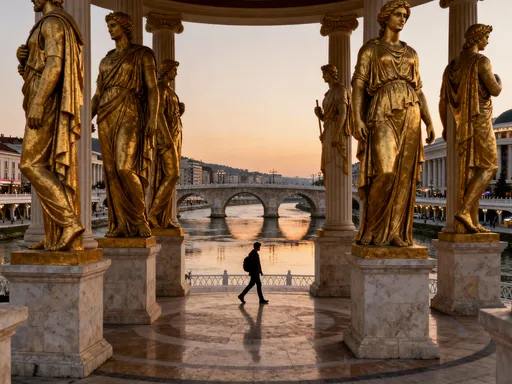
Macedonia Square, the centerpiece of Skopje’s urban renewal project, is impossible to ignore. Towering statues of ancient warriors, gold-plated and larger than life, stand guard over wide plazas and cascading fountains. Columns rise like echoes of imperial Rome, and at the center, a massive monument emits light and music at intervals. To some, it feels excessive. To others, it’s a bold statement of pride. But whatever your opinion, walking through this space is an experience that demands attention.
Locals are divided. Some see the project as a waste of resources, a spectacle that overshadows more pressing needs. Others appreciate the ambition, the effort to create a landmark that asserts national identity. Tourists often arrive with skepticism, only to find themselves captivated by the sheer scale and theatricality of it all. But the real value of the new city center isn’t in judging it—it’s in experiencing it with curiosity.
Walking through the square at different times of day reveals new layers. In the morning, joggers weave around fountains, and office workers pause for coffee at nearby kiosks. At dusk, the statues are lit from below, casting long shadows that stretch across marble floors. The music from the central monument plays softly, a blend of traditional melodies and modern orchestration. It’s not subtle, but it is memorable. And for a moment, the city feels grand in a way that few would expect.
For travelers, especially those who value both history and human expression, this part of Skopje offers a lesson in perspective. It’s easy to dismiss what doesn’t fit our expectations. But by walking through the space without judgment—by allowing ourselves to be surprised—we open the door to deeper understanding. The new city center may not be everyone’s favorite part of Skopje, but it is undeniably a part of its story. And sometimes, the most meaningful travel moments come not from agreement, but from engagement.
Old Bazaar (Stara Charshija): Where Time Slows Down
Step into the Old Bazaar, and the pace of life changes instantly. One of the oldest and largest marketplaces in the Balkans, Stara Charshija has been a hub of commerce and community for over 500 years. Cobbled streets wind beneath arched stone gateways, leading to courtyards where the scent of roasted coffee beans mingles with the metallic tang of coppersmiths at work. Here, time doesn’t move in hours and minutes—it moves in sips of tea, in the rhythm of hammers shaping brass, in the slow unfolding of conversation.
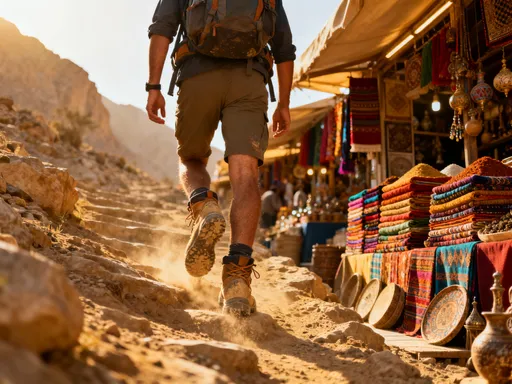
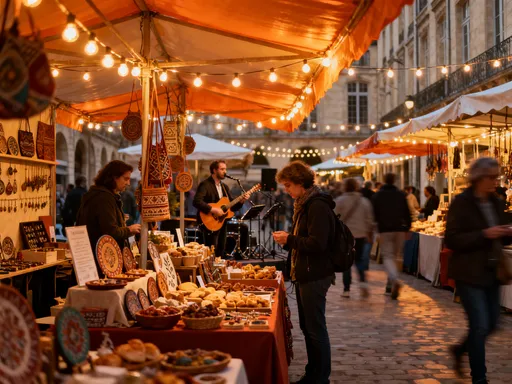
The sensory experience is rich and immediate. Sunlight filters through wooden awnings, casting patterns on handwoven kilims. Vendors display rows of silver filigree, carved wooden boxes, and jars of honey infused with mountain herbs. A shopkeeper pours thick, dark coffee into small cups, offering it with a smile. There’s no pressure to buy. Instead, there’s an invitation to linger, to observe, to participate in the quiet theater of daily trade.
For many visitors, especially women who spend their days managing homes and families, the Old Bazaar feels like a sanctuary. It’s not about shopping. It’s about connection. A weaver explains how her grandmother taught her the patterns. A baker slices warm burek from a golden tray, offering a piece “just to taste.” These interactions aren’t transactional—they’re human. And in a world that often reduces travel to consumption, they remind us that the most valuable souvenirs are not things, but moments.
The courtyard cafés of the bazaar are perfect for slowing down. Sitting on low wooden stools, sipping mint tea or nibbling on a flaky pastry, you become part of the scene. Children chase each other between tables. Elderly men debate politics over tiny glasses of rakija. The call to prayer echoes from the nearby Mustafa Pasha Mosque, soft and melodic. There’s a sense of continuity here—a feeling that life has unfolded in this rhythm for generations. And for a few hours, you’re not a visitor. You’re simply present.
Hidden Corners: Finding Peace in Unexpected Spots
Beyond the main attractions, Skopje reveals its quietest treasures in places that don’t appear on maps. A narrow staircase winds up a hillside, lined with blooming jasmine and potted geraniums. At the top, a small park offers a view of the city bathed in morning light. A residential street hides a café where old women gather in the late afternoon, sipping herbal infusions and sharing stories in hushed voices. These are the spots where Skopje exhales.
One of the most peaceful places is the Memorial House of Mother Teresa, located in the neighborhood where she was born. Though modest in size, the space is deeply moving. Photographs, personal letters, and simple artifacts tell the story of a woman whose life was defined by service. Visitors often sit in silence, reflecting on her legacy. For mothers, caregivers, and those who give quietly every day, the memorial resonates with a quiet power.
Another hidden gem is the Kale Fortress, perched above the Old Bazaar. While not entirely unknown, it’s often overlooked by hurried tourists. A short climb leads to panoramic views of the city, the river, and the surrounding mountains. In the early morning, when mist still clings to the valley, the fortress feels like a place outside of time. Birds call from the treetops. The city stirs below, but up here, there is stillness.
These quiet spots are best visited at the edges of the day—early morning or late afternoon—when the heat softens and the crowds fade. They are not places to check off a list. They are places to breathe, to think, to remember why we travel in the first place. In a life filled with responsibilities, these moments of peace are not luxuries. They are necessities.
Local Life Beyond the Sights: Cafés, Conversations, Rhythms
To understand Skopje, you must spend time where locals do—not in tourist zones, but in neighborhood squares, corner cafés, and tree-lined parks. In the mornings, residents walk dogs or buy fresh bread from corner bakeries. In the afternoons, families nap or gather for coffee. By evening, the streets fill with people taking their daily promenade, strolling along the river or meeting friends at outdoor tables.
One of the most telling rhythms is the café culture. In Skopje, coffee is not a quick pick-me-up. It’s a ritual. People sit for hours, sipping slowly, reading newspapers, or simply watching the world go by. In a neighborhood café in the Debar Maalo district, I once spent two hours with no book, no phone, just the sound of conversation and the occasional clink of a teaspoon. No one rushed me. No one questioned why I wasn’t ordering more. I was simply welcome.
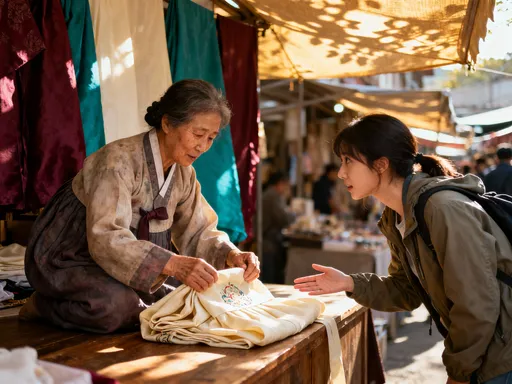
These moments of unstructured time are rare in modern life, especially for women who often carry the invisible labor of managing households. In Skopje, there’s a quiet permission to pause. A shopkeeper might offer a seat and a glass of water. A grandmother walking her granddaughter might stop to chat, even if your languages don’t align. These exchanges don’t require fluency. They require only openness.
And in that openness, something beautiful happens. Walls come down. Smiles become universal. You begin to see not just a city, but the people who give it life. Travel, at its best, isn’t about collecting destinations. It’s about collecting connections. And Skopje, in its understated way, makes those connections possible.
Why Skopje Changes How You Travel
Skopje doesn’t transform travelers with grand monuments or dramatic landscapes. It changes us in quieter ways—by challenging our assumptions about what a city should be, by rewarding slowness, by revealing beauty in the unpolished and the overlooked. It teaches that not every destination needs to dazzle to be meaningful.
After spending days here, the idea of rushing through a checklist of sights feels hollow. Instead, there’s a new desire—to observe, to listen, to stay a little longer. The city’s rhythm becomes a mirror, reflecting back the parts of ourselves that we’ve forgotten: the part that notices details, that values conversation, that finds joy in simplicity.
For women who often carry the weight of others’ needs, Skopje offers a rare gift: permission to move at your own pace. To sit without purpose. To wander without direction. To be, simply, in a place that doesn’t demand anything of you. And in that space, something shifts. You begin to see not just the world differently, but yourself.
So the next time you plan a trip, consider the places that don’t call out for attention. The cities that are easy to overlook. The destinations that don’t fit the brochure. Because sometimes, the most powerful journeys aren’t the ones that take you to the highest peaks or the most famous landmarks. They’re the ones that teach you how to see—slowly, deeply, and with an open heart. Skopje doesn’t shout. But if you listen closely, it will tell you everything you need to hear.