You Won’t Believe What Nha Trang’s Street Food Scene Just Did to Me
Nha Trang isn’t just beaches and waves — it’s a flavor explosion waiting to hit you. I came for the ocean, but stayed for the food. From smoky grilled meats on bustling side streets to fragrant bowls of bún chả served on tiny plastic stools, every bite told a story. This coastal gem blends Vietnamese tradition with island freshness in ways I never expected. If you're chasing real taste, not tourist traps, Nha Trang’s dining scene will rewrite your travel menu. It’s not about fine china or curated tasting menus — it’s about authenticity, warmth, and the kind of meals that leave an imprint on your memory. Here’s how one city turned a simple vacation into a culinary awakening.
Arrival Vibes: First Impressions of Nha Trang’s Food Culture
The moment you step off the plane in Nha Trang, the air carries a symphony of scents — charred edges of meat over open grills, the bright punch of lemongrass, and the earthy sweetness of caramelized fish sauce. Unlike other tourist-heavy destinations where authenticity gets diluted, Nha Trang feels refreshingly real. The city pulses with culinary energy from dawn until well past midnight. By 5:30 a.m., vendors are already setting up along narrow alleys near the central market, arranging baskets of fresh herbs, marinating meats with rhythmic precision, and firing up clay stoves for the day’s first meals. There’s no pretense here — just food made with care, passed down through generations.
One of the first things I noticed was how deeply food is woven into daily life. Locals don’t just eat to survive; they celebrate every meal. Breakfast, in particular, is treated as a ritual. I wandered into a quiet corner near a residential lane and found a small cluster of women cooking bánh căn — delicate, bite-sized rice pancakes baked in small clay molds. The batter, made from rice flour and coconut milk, sizzles into golden-brown pockets with a soft, custard-like center. They’re served piping hot with a side of nước chấm, a balanced dipping sauce that dances between sweet, sour, salty, and umami. It’s not fancy, but it’s deeply satisfying — the kind of meal that makes you feel instantly welcomed.
What stood out most was the attention to detail. Even in these humble street stalls, every component has purpose. The herbs — mint, perilla, cilantro, and Vietnamese balm — aren’t just garnish; they’re integral to the flavor and digestion. The chili slices aren’t for show; they’re there for those who know how to balance heat with harmony. And the people? They smile, gesture, and serve with a quiet pride. This isn’t performance for tourists — it’s how they feed their families. That sincerity is what makes Nha Trang’s food culture so compelling from the very first bite.
The Heart of the City: Exploring the Nha Trang Night Market
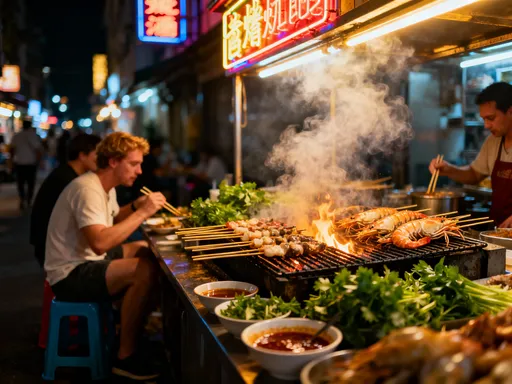
When the sun dips below the South China Sea, Nha Trang transforms. The waterfront comes alive with the sizzle of grills, the clatter of woks, and the hum of conversation in Vietnamese and broken English. The Nha Trang Night Market isn’t just a place to eat — it’s a full sensory experience. Stretching along the promenade, it turns the city into an open-air kitchen where the menu changes with the season and the catch of the day. Neon lights flicker above rows of stalls, each one glowing like a beacon for hungry wanderers. The energy is electric, the pace is lively, and the aromas are impossible to ignore.
I started with bánh xèo, the crispy turmeric-infused pancake that’s a staple across central Vietnam. Watching it cook is half the pleasure — the vendor pours the batter onto a hot skillet, adds plump shrimp, bean sprouts, and pork, then folds it into a golden half-moon. It’s served with a plate of fresh herbs and a bowl of dipping sauce. Breaking off a piece reveals a perfect crunch on the outside, tender and savory within. Paired with cool lettuce leaves and fragrant herbs, it’s a harmony of textures and flavors that feels both indulgent and light.
But the real showstopper was the seafood section. Dozens of stalls specialize in grilled shellfish, and the scent of garlic butter and scallions fills the air. I tried grilled scallops on the half-shell, each one topped with a generous dollop of garlic butter, spring onions, and a squeeze of lime. They’re served sizzling on a metal tray, the edges slightly crisped, the center juicy and sweet. One bite, and I understood why locals return here night after night. The prices are incredibly reasonable — a full plate of scallops costs less than five dollars — and the quality is exceptional. High turnover means everything is cooked fresh, often within minutes of being pulled from the sea.
What makes the night market special isn’t just the food — it’s the atmosphere. Families gather around low tables, children laugh while clutching skewers of grilled meat, and solo travelers like me find connection in shared smiles and pointed fingers at the menu. There’s no pressure, no rush. You wander, you point, you eat. And in that simplicity, there’s joy. The night market isn’t just feeding bodies — it’s nourishing community.
Seafood Straight from the Source: Why the Coast Changes Everything
Nha Trang’s identity is shaped by the sea, and nowhere is that more evident than on the plate. Being a coastal city means access to seafood so fresh it needs little more than fire and seasoning to shine. Every morning, fishing boats return to the harbor with nets full of snapper, squid, clams, and prawns. By midday, much of that catch is already on grills, in soups, or being sliced for fresh rolls. The proximity to the source makes all the difference — this isn’t frozen, shipped, or stored for days. It’s alive one moment, on your plate the next.
I visited a family-run seaside restaurant just outside the main tourist strip. The owner, a woman in her fifties with sun-kissed hands and a warm smile, invited me to choose my own crab from a tank of live ones. I pointed at a particularly feisty one with large claws, and within minutes, it was steamed and served with a side of rau răm — Vietnamese coriander, a pungent herb that pairs perfectly with shellfish. The crab meat was sweet, tender, and clean, with no trace of the fishiness that can come from older seafood. Dipping it in a mix of lime, chili, and fish sauce elevated it even further. Every bite felt like a gift from the ocean.
But crab was just the beginning. I tried grilled octopus, cooked over an open flame until the edges were charred and crisp, the inside still tender and chewy. It came with a squeeze of lemon and a sprinkle of salt — no need for anything more. Clams in lemongrass broth were another highlight, their briny sweetness balanced by the citrusy aroma of fresh herbs. And the prawns — large, meaty, and grilled over charcoal — were so flavorful they didn’t even need sauce. The secret? They were caught the same morning.
What struck me most was how little processing these ingredients undergo. There’s no heavy batter, no deep frying, no artificial flavors. The cooking techniques are simple — grilling, steaming, stir-frying — because the ingredients don’t need to be masked. This is food that respects its source. For travelers who care about sustainability and quality, Nha Trang offers a model of how seafood should be enjoyed: fresh, local, and treated with reverence.
Hidden Eats: Off-the-Beaten-Path Gems Only Locals Know
Beyond the postcard-perfect beaches and crowded night markets, tucked away in quiet alleys and residential corners, are the true culinary treasures of Nha Trang. These aren’t the places you’ll find on glossy travel brochures or Google Maps with five-star reviews. They’re small, unmarked stalls run by families who’ve been cooking the same recipes for decades. They don’t need signs or menus in English — their reputation travels by word of mouth, and their tables are always full of locals.
One morning, I followed a group of motorbikes down a narrow lane near a local market and ended up at a tiny stall serving phở. No chairs, just plastic stools barely two inches off the ground. The broth was light, clear, and deeply aromatic — the kind that tastes like it’s been simmering for 12 hours or more. It was garnished with fresh basil, sliced onions, and a squeeze of lime. The rice noodles were perfectly cooked, and the slices of beef were tender and flavorful. I later learned the vendor starts preparing the broth at 2 a.m. every day, using a blend of charred ginger, star anise, and beef bones. There’s no secret ingredient — just time, care, and tradition.
Another day, I discovered a family-run spot specializing in bún sứa, a jellyfish noodle soup unique to central Vietnam. At first glance, it looked simple — a bowl of rice noodles, shredded herbs, and translucent strips of jellyfish in a light broth. But the first bite was a revelation. The jellyfish offered a delicate crunch, the broth was tangy and slightly sweet, and the herbs added freshness. It’s a dish that’s both light and satisfying, perfect for a warm afternoon. The vendor told me, through gestures and broken English, that the jellyfish is cleaned and cured in-house, a process that takes two days to ensure safety and texture. This isn’t fast food — it’s slow, thoughtful cooking meant to honor the ingredient.
These hidden spots share a few things in common: they’re humble, they’re busy, and they’re authentic. They don’t cater to tourists — they cook for their neighbors. And yet, they welcome visitors with open arms. There’s a quiet dignity in these places, a sense that food is more than fuel — it’s connection. Finding them requires curiosity, a bit of courage, and a willingness to wander. But the reward? A meal that feels like home, even if you’ve never been here before.
Café Culture: More Than Just Coffee in Nha Trang
While Nha Trang is best known for its street food, its café culture is a quiet delight. It’s not flashy or trendy — it’s simple, welcoming, and deeply rooted in daily life. From sidewalk kiosks to rooftop terraces with ocean views, cafés in Nha Trang are places to pause, reflect, and savor a moment of calm. The drink of choice? Cà phê sữa đá — strong Vietnamese drip coffee mixed with sweetened condensed milk and served over ice. It’s bold, creamy, and deeply satisfying, often costing less than a dollar.
But coffee is just the beginning. Many cafés double as dessert spots, offering a range of sweet treats that reflect the region’s tropical abundance. Chè, a category of sweet iced drinks made with beans, jellies, fruit, and coconut milk, is a popular afternoon pick-me-up. I tried a version with mung beans, lotus seeds, and coconut jelly — it was refreshing, lightly sweet, and cooling in the midday heat. Another favorite was fresh coconut ice cream, scooped by hand from a coconut shell and served with a sprinkle of roasted peanuts. The texture was rich and creamy, the flavor pure and natural.
One of my most memorable café experiences was at a quiet spot near a small park. It had no name, just a few tables under a shaded awning. I ordered iced coconut coffee and watched as life unfolded around me — elderly men playing chess, children chasing pigeons, couples sharing quiet conversations. The breeze from the bay rolled in, carrying the scent of salt and frangipani. In that moment, I wasn’t just drinking coffee — I was part of the rhythm of the city. That’s the magic of Nha Trang’s cafés: they’re not just places to eat or drink. They’re spaces to belong.
Dining Etiquette & Practical Tips for Food Lovers
Eating like a local in Nha Trang means embracing a different pace and mindset. This isn’t a city of reservations, white tablecloths, or formal service. It’s spontaneous, communal, and deeply social. Meals happen on plastic stools, sometimes on the sidewalk, often without menus. The key is to be open, curious, and respectful. Pointing at what others are eating, smiling, and saying “một cái, cảm ơn” (one, thank you) goes a long way. Don’t fear the spice — many dishes come with chili on the side, so you can adjust to your taste.
Carry small bills — most street vendors don’t have change for large notes. Wear comfortable shoes, because you’ll likely be walking between stalls or standing while you eat. Come hungry, because portion sizes are generous and prices are low. A full meal with seafood, rice, and a drink can cost under ten dollars. And drink only bottled water — it’s widely available and affordable.
One of the most important tips? Follow the crowds. Busy stalls mean high turnover, which means freshness. If you see a line of locals waiting, join it. Trust the process. Also, don’t skip the herbs — they’re not just decoration. They’re meant to be eaten with your meal, adding freshness, aiding digestion, and balancing rich flavors. And don’t rush. Meals here are meant to be lingered over, shared, enjoyed. A simple bowl of noodles can turn into a two-hour conversation if you let it.
Lastly, be adventurous but smart. Try new things — grilled quail, snail soup, banana flower salad — but stick to busy, well-established spots. Hygiene standards are generally good in popular areas, especially where turnover is high. If a place looks clean, busy, and well-run, it probably is. With these tips, even first-time visitors can dive into Nha Trang’s food scene with confidence and joy.
Final Bite: Why Nha Trang’s Food Stays With You
Months after my trip, I still dream about the flavors of Nha Trang. Not because they were exotic or extravagant, but because they were real. The city doesn’t serve food — it shares it. Every meal felt like an invitation to slow down, to connect, to be present. Whether it was a $1 bowl of bánh căn at sunrise or a seaside feast of grilled scallops under neon lights, each experience carried a sense of warmth and authenticity that’s hard to find elsewhere.
Nha Trang’s food scene is more than a collection of dishes — it’s a reflection of its people. It’s resilient, generous, and deeply rooted in tradition. It doesn’t try to impress; it simply offers what it has, made with care. And in that simplicity, there’s profound beauty. The flavors linger long after the tan fades, the memories grow richer with time, and the desire to return only deepens.
If you’re planning a trip, come ready to explore with your stomach first. Let the scents guide you, follow the locals, and don’t be afraid to sit on a tiny stool with no menu. In Nha Trang, the best meals aren’t found — they’re discovered. And once you’ve tasted them, you’ll understand why this coastal city doesn’t just feed you. It remembers you.