Hidden Gems of Bratislava: Where Quirky Architecture Steals the Show
Ever stumbled upon a city that feels like a secret whisper in Europe’s ear? Bratislava isn’t just a pit stop between Vienna and Budapest—it’s a treasure trove of unexpected architectural wonders. From surreal sculptures to communist-era relics, I was blown away by how much character this compact capital packs. Forget the crowded tourist trails; let’s dive into the offbeat, the odd, and the utterly unforgettable. This is a city where history layers upon itself—Gothic spires peek over socialist blocks, whimsical statues wink from alleyways, and bridges defy gravity with retro-futuristic flair. For travelers seeking authenticity, Bratislava offers a refreshing alternative: urban beauty not polished for postcards, but lived-in, evolving, and deeply human.
Discovering Bratislava’s Architectural Soul
Bratislava often plays second fiddle in Central European itineraries, overshadowed by its flashier neighbors. Yet this modest Slovak capital, nestled along the Danube River, holds a quiet confidence in its identity. Its charm lies not in grand monuments alone, but in the way its architecture tells a story of resilience, reinvention, and wit. Unlike cities that preserve only their golden ages, Bratislava embraces all chapters of its past—from medieval roots to Habsburg elegance, from wartime scars to Cold War pragmatism, and now, a vibrant post-independence renaissance. This layered urban fabric invites travelers to look beyond guidebook highlights and discover a city that rewards curiosity with surprise.
Architecture, more than any other art form, reflects the values, struggles, and dreams of a society. In Bratislava, that narrative unfolds in brick, steel, and concrete. The city does not hide its contradictions; it celebrates them. A Baroque church stands beside a glass office tower. A Soviet-era housing block shelters a trendy café. A bronze statue of a sewer worker lounges in the middle of a cobblestone street. These juxtapositions are not accidents—they are the essence of Bratislava’s personality. For the discerning traveler, especially those who appreciate depth and authenticity over spectacle, this city offers an enriching journey through time and design.
What makes Bratislava particularly appealing to mature travelers—especially women in their 30s to 50s—is its walkability, safety, and understated elegance. There’s no need to rush. The city unfolds at a gentle pace, perfect for reflective strolls, quiet observation, and spontaneous discoveries. Whether you're traveling solo, with a partner, or as part of a small group, Bratislava welcomes you to explore not just its sights, but its soul. And that soul speaks most clearly through its buildings—some grand, some humble, all meaningful.
Beyond the Castle: Rethinking Bratislava’s Skyline
Most first-time visitors head straight to Bratislava Castle, perched on a hilltop like a crown. And rightly so—it’s a striking landmark with panoramic views of the city and the Austrian border just across the river. But to stop there is to miss the real architectural drama unfolding below. The true skyline of Bratislava is not defined by one monument, but by a dynamic conversation between old and new, monumental and mundane, elegant and eccentric.
Wander just a few blocks from the castle, and you’ll encounter a skyline that defies expectations. Gleaming postmodern towers rise alongside pastel-colored Secessionist facades. A 19th-century neo-Gothic church shares the streetscape with a futuristic steel-and-glass parliament building. This architectural diversity is not chaotic—it’s harmonious in its contrast. Each structure adds a voice to the city’s ongoing dialogue about identity and progress.
One of the most fascinating aspects of Bratislava’s urban landscape is how it refuses to erase its past. Unlike cities that demolish outdated buildings in favor of sleek modernity, Bratislava integrates them. A communist-era department store might now house boutique shops. An old factory complex could be transformed into artist studios. This respect for continuity gives the city a grounded, lived-in feel. It’s not trying to be something it’s not. Instead, it evolves with intention, preserving memory while embracing change. For travelers who value authenticity, this balance is deeply reassuring.
The city’s skyline also reflects its geopolitical journey. Once part of the Austro-Hungarian Empire, then Czechoslovakia, and now the capital of an independent Slovakia, Bratislava’s buildings bear the marks of each era. You can trace history in the materials used, the styles favored, and the functions assigned. This makes every walk through the city a kind of time travel—a gentle, accessible way to understand a nation’s story without ever stepping into a museum.
The Soviet Echo: Panelák Estates and Brutalist Beauty
No discussion of Bratislava’s architecture would be complete without acknowledging its most visible legacy: the vast panelák housing estates. The largest of these, Petržalka, is one of the most extensive prefabricated residential districts in Europe. Home to over 100,000 people, it stretches across the Danube in a sea of uniform high-rises. At first glance, these concrete towers might seem monotonous, even bleak. But look closer, and a different story emerges—one of community, practicality, and quiet dignity.
Paneláks were built during the socialist era to solve a housing crisis. Using standardized concrete panels, they could be assembled quickly and affordably. While often criticized for their aesthetic rigidity, they provided warm, dry homes with modern amenities to families who previously lived in overcrowded or substandard conditions. For many Slovaks, these buildings represent progress, not oppression. They are a testament to a time when the state prioritized basic human needs, even if the design lacked ornamentation.
Today, Petržalka is far from the gray, lifeless stereotype. Balconies burst with flower boxes. Ground floors host lively markets, playgrounds, and small businesses. Children ride bikes in tree-lined courtyards. Commuters stream to trams and buses that connect the district to the city center. The human scale of daily life softens the monumental scale of the architecture. Visitors who take the time to walk through Petržalka often leave with a new appreciation for functionalist design and the communities that inhabit it.
Architectural historians and urban planners increasingly recognize the value of these estates. Rather than tearing them down, many advocate for thoughtful renovation—improving insulation, updating interiors, and enhancing public spaces. Some buildings have already been repainted in cheerful colors, breaking the monotony with personality. This evolution reflects a broader shift: from seeing paneláks as relics to recognizing them as living neighborhoods with cultural and historical significance. For travelers, visiting Petržalka offers a rare chance to see urban life as it’s truly lived, beyond the postcard-perfect old town.
Street-Level Surprises: Sculptures That Talk Back
If Bratislava’s skyline tells a grand historical narrative, its streets whisper playful secrets. Scattered throughout the city are small-scale sculptures that transform ordinary corners into moments of delight. These whimsical installations invite interaction, humor, and reflection—proving that architecture doesn’t have to be monumental to be memorable.
The most famous of these is Čumil, the “Man at Work”—a bronze statue of a sewer worker leaning out of a manhole, smiling as if on a lunch break. Located in the heart of the Old Town, it’s one of the most photographed spots in the city. Tourists queue to take selfies with him, often placing hands on his head for good luck. While some see him as a lighthearted mascot, others interpret him as a tribute to the invisible labor that keeps cities running. Either way, he breaks the seriousness often associated with public art and invites a smile.
Another beloved figure is Schöne Naci, a life-sized statue of a mustachioed man sitting on a bench, gazing longingly at passersby. Based on a real-life character who used to flirt with women in this spot, the sculpture captures a moment of local folklore with tenderness and humor. It’s not heroic or grand—just human. People sit beside him, talk to him, even leave notes in his pocket. This kind of interaction turns architecture into a conversation between past and present, real and imagined.
Then there’s the Čapí Bara installation—a surreal sculpture of a giant stork standing on a lamppost, carrying a bundle in its beak. Located near the Danube, it blends myth and modernity, referencing both Slovak folk tales and the city’s love for the absurd. These kinds of artistic interventions do more than decorate—they democratize art. They make it accessible, unintimidating, and part of daily life. For families, couples, and solo travelers alike, they create shared moments of joy and curiosity.
What unites these sculptures is their ability to humanize the urban environment. In a world where cities can feel impersonal and fast-paced, these small works slow us down. They make us look, laugh, and connect. They remind us that a city’s character isn’t just in its grand buildings, but in the details—the unexpected, the quirky, the quietly poetic.
Forgotten Facades: Hidden Courtyards and Revitalized Warehouses
While the main squares of Bratislava draw the crowds, some of its most beautiful architecture hides in plain sight. Tucked behind unassuming entrances in the Old Town are hidden courtyards—oases of calm adorned with Art Nouveau stucco, wrought-iron balconies, and climbing vines. These interior spaces, once the backbones of multi-family homes, now offer glimpses of a more ornate past, when craftsmanship was celebrated in even the most private corners.
Walking through these courtyards feels like stepping into a different century. The noise of the street fades. Sunlight filters through ivy-covered arches. Faded frescoes hint at former grandeur. Some courtyards have been carefully restored, with cafes and galleries opening onto their serene spaces. Others remain modest, used as shared gardens or quiet retreats for residents. Their preservation is a quiet victory against the pressures of modern development. They prove that beauty and functionality can coexist, even in dense urban settings.
Along the Danube, another kind of transformation is underway. Former industrial zones, once home to warehouses and storage facilities, are being reborn as creative hubs. The Apollo Bridge area, once a neglected riverside stretch, now hosts adaptive reuse projects where old brick buildings house design studios, co-working spaces, and boutique hotels. These conversions respect the original structures—the exposed beams, brick walls, and large windows—while adding modern comforts. The result is a blend of old and new that feels authentic, not forced.
This kind of urban renewal is particularly inspiring for travelers interested in sustainable design. Instead of demolishing and rebuilding, Bratislava is choosing to repurpose. This approach reduces waste, preserves history, and creates unique spaces that chain stores could never replicate. It also avoids the pitfalls of over-gentrification. While some areas have become more upscale, many projects maintain a local character, supporting small businesses and community initiatives. This balance—between progress and preservation—is something other cities could learn from.
Crossing the Danube: Bridges with Personality
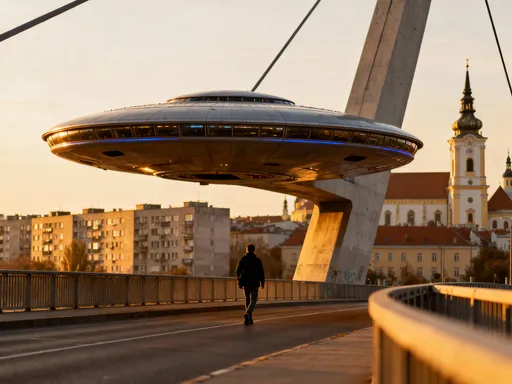
In any city, bridges are more than functional—they are symbols. In Bratislava, they are also statements. The most iconic is the Nový Most, officially called Most SNP (Bridge of the Slovak National Uprising). At first glance, it looks like a flying saucer hovering over the Danube. The bridge itself is a slender, single-pylon cable-stayed structure, but its defining feature is the UFO-shaped observation deck and restaurant perched at the top. Completed in 1972 during the communist era, it blends Cold War engineering with a touch of futurism that feels almost playful.
Riding the glass elevator to the top offers one of the best views in the city—panoramic, unobstructed, and slightly surreal. The restaurant, while touristy, provides a unique dining experience. But even from the ground, the bridge commands attention. Its sleek, minimalist design contrasts with the organic curves of the river and the historic skyline. It’s a bold architectural gesture—one that says this city is not afraid of the future.
Yet Bratislava’s bridge story doesn’t end there. In recent years, new pedestrian and cycling bridges have been added, each with its own character. The Lafranconi Bridge, for example, features gentle curves and soft lighting, creating a welcoming space for evening strolls. These newer crossings prioritize people over cars, reflecting a shift in urban values. They are not just about getting from one side to the other—they are about experiencing the river, the skyline, and the rhythm of city life.
Together, these bridges tell a story of evolution. From the monumental ambitions of the past to the human-centered design of the present, they mirror Bratislava’s journey from a socialist capital to a modern European city. For travelers, crossing them is not just a commute—it’s a way to feel the pulse of the city, to see it from different angles, and to appreciate how infrastructure can be both useful and beautiful.
Architectural Alchemy: How Bratislava Turns the Ordinary Into Extraordinary
What makes Bratislava’s architecture so compelling is not any single building, but the city’s overall attitude toward its built environment. There’s a sense of alchemy here—a quiet magic that transforms the ordinary into the extraordinary. A sewer worker becomes a beloved statue. A concrete housing block becomes a vibrant community. A Cold War bridge becomes a symbol of hope. This ability to find beauty in the unexpected is what sets Bratislava apart.
For travelers, this means the city rewards slow, attentive exploration. You don’t need to check off a list of must-see sights. Instead, let yourself wander. Look up at facades. Peek into courtyards. Sit on a bench and watch life unfold. The real treasures are often unmarked, undocumented, and unplanned. They are in the way sunlight hits a stained-glass window, or how a street musician plays beneath a brutalist overpass. These moments of serendipity are what make travel meaningful.
To make the most of your visit, consider a self-guided walking tour that starts in the Old Town and moves toward Petržalka, crossing the Nový Most along the way. Begin early in the morning when the light is soft and the streets are quiet. Visit the hidden courtyards first, then explore the sculptures, and end with a ride to the top of the UFO bridge. Wear comfortable shoes, carry a water bottle, and don’t rush. The city reveals itself gradually.
When in Bratislava, observe local etiquette: greet shopkeepers when entering stores, respect quiet hours in residential areas, and avoid loud conversations in public transport. Tipping is customary—10% in restaurants, round up for taxi rides. English is widely spoken in tourist areas, but a simple ‘ďakujem’ (thank you) in Slovak goes a long way. Above all, approach the city with openness. Let its contrasts intrigue you. Let its quirks charm you. And let its architecture tell you its story, one brick at a time.
Why Bratislava Deserves a Second Glance
Bratislava may not have the fame of Paris or the grandeur of Vienna, but it has something rarer: authenticity. It doesn’t perform for tourists. It simply is. Its architecture—eclectic, evolving, and full of character—reflects a city that has lived through change and come out with a quiet confidence. It invites not admiration from afar, but connection up close.
In an age of checklist tourism, where travelers race from one highlight to the next, Bratislava offers a different path. It asks you to slow down. To look deeper. To find wonder in the overlooked. Its beauty isn’t in perfection, but in imperfection—the chipped paint, the mismatched tiles, the statue with a missing shoe. These are the marks of a city that has been loved, lived in, and lived through.
For women in their 30s to 50s—mothers, professionals, dreamers, explorers—Bratislava offers a travel experience that feels both enriching and grounding. It’s safe, walkable, and rich with stories. It doesn’t demand energy; it restores it. And in its quiet corners and bold structures, it reminds us that cities, like people, are most interesting when they embrace their complexities.
So next time you plan a European getaway, consider giving Bratislava more than a passing thought. Give it a full day, a weekend, or even a week. Let its architecture guide you. Let its rhythms soothe you. And let its hidden gems remind you that the most unforgettable journeys are not always the loudest, but the ones that speak to the curious heart.