You Won’t Believe What I Found in Penang’s Hidden Corners
Penang isn’t just about street food and temples—there’s a deeper layer waiting to be discovered. I wandered beyond George Town’s painted walls and tourist trails, stumbling upon quiet villages, fading heritage workshops, and rituals passed down for generations. This is cultural travel at its most authentic—raw, real, and rarely seen. If you're looking for more than check-in-and-leave tourism, come with me off the map.
Beyond the Postcard: Rethinking Penang’s Cultural Identity
Penang’s reputation as a UNESCO World Heritage site often centers on its colonial architecture, vibrant murals, and celebrated culinary scene. While these elements are undeniably captivating, they represent only one dimension of the island’s identity. The true soul of Penang lies beyond the postcard-perfect lanes of George Town, in the quiet corners where daily life unfolds without fanfare. In areas like Balik Pulau and Teluk Bahang, culture is not curated for visitors—it is lived, inherited, and quietly sustained across generations.
These outlying communities preserve traditions that predate mass tourism. Here, identity is shaped not by international recognition but by ancestral memory, religious practice, and agricultural rhythm. A farmer planting paddy fields may not know his village is part of a larger cultural narrative, yet his work is a living thread in Penang’s heritage tapestry. When travelers venture beyond the designated heritage zone, they encounter a different kind of authenticity—one rooted in continuity rather than performance.
The contrast between mainstream tourism and rural cultural preservation is striking. In George Town, heritage is visible, celebrated, and sometimes commercialized. But in the island’s interior, traditions endure not because they attract attention, but because they matter to the people who uphold them. There’s a humility in this quiet persistence—a refusal to perform for outsiders. To witness these practices is to understand that cultural richness isn’t always loud or photogenic; sometimes, it’s found in the silence of a morning prayer or the careful folding of banana leaves for a family meal.
This deeper layer of Penang challenges the typical tourist itinerary. It invites a slower, more attentive form of travel—one that values presence over photographs and connection over convenience. By stepping away from the crowds, visitors gain access to a version of Penang that remains untouched by trend or translation. It’s a reminder that heritage is not only preserved in museums and monuments, but also in the ordinary acts of daily life.
The Pulse of Village Life: A Day in the Rural Heartland
As dawn breaks over Balik Pulau, the countryside stirs with a rhythm untouched by urban urgency. Roosters call from wooden coops, smoke curls from kitchen chimneys, and farmers in wide-brimmed hats make their way to the fields. The air carries the scent of damp earth and ripening jackfruit, mingling with the faint aroma of clove and lemongrass growing along the roadside. This is where Penang breathes at its own pace—unhurried, grounded, and deeply connected to the land.
By mid-morning, village life unfolds in a series of small, meaningful moments. Elders gather on wooden benches outside clan houses, sipping tea and conversing in Hokkien, their voices rising and falling like a familiar melody. Children pedal bicycles with wobbling balance, their laughter echoing through narrow lanes lined with weathered shophouses. A woman kneads dough in her open-air kitchen, the rhythmic thud of her hands on the counter blending with the distant clang of a temple bell. These scenes are not staged; they are the unremarkable yet profound fabric of everyday existence.
The sensory experience of rural Penang is rich and layered. In backyards, women spread chili paste on woven mats to dry under the sun, the deep red hue glowing against the pale weave. The sound of mortar and pestle echoes from kitchens where mothers grind spices for family meals, using recipes passed down through decades. At roadside stalls, vendors sell freshly harvested rambutan and banana chips from wooden crates, their prices unchanged for years. Even the pace of conversation feels different—slower, more deliberate, allowing space for listening and reflection.
What stands out most is the absence of digital distraction. There are no loudspeakers blasting promotions, no influencers filming content, no rush to capture the moment. Instead, there’s a quiet dignity in the way people engage with their surroundings—tending to crops, repairing fishing nets, or simply sitting in companionable silence. For the visitor, this offers a rare opportunity to slow down, to observe without intrusion, and to appreciate the beauty of a life lived in harmony with nature and tradition.
Echoes of Craft: Meeting Artisans Keeping Traditions Alive
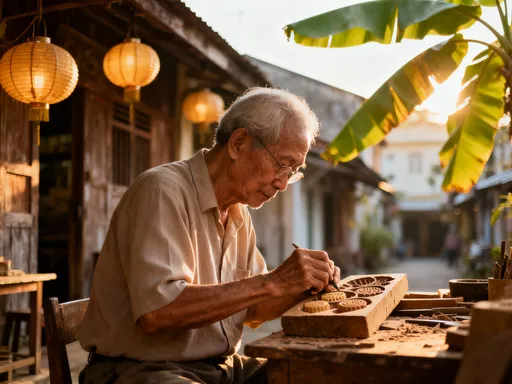
In a dimly lit workshop on the edge of Teluk Bahang, an elderly craftsman runs his fingers over a block of chengal wood, his eyes tracing the grain before making the first cut. He is carving a mold for kuih, the delicate steamed cakes that are a staple of Malay and Peranakan celebrations. Each groove is hand-chiseled, a process that can take days to complete. This is not mass production; it is artistry shaped by memory, patience, and an unspoken vow to keep a fading tradition alive.
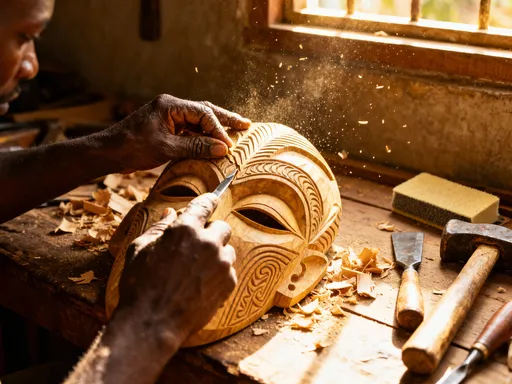
Such artisans are the quiet guardians of Penang’s intangible heritage. Unlike the souvenir stalls in tourist zones, their work is not designed for quick sales or social media appeal. They operate in near-anonymity, their workshops tucked behind rice fields or beside quiet mosques. A batik printer in a village near Paya Terubong still uses natural dyes and hand-stamped copper blocks, her hands moving with the precision of someone who has repeated the motion thousands of times. She does not advertise online, nor does she accept credit cards. Her customers are neighbors, relatives, and the occasional visitor who finds her by word of mouth.
Another hidden master is a Chinese calligraphy brushmaker in a forgotten corner of Air Itam. Using goat hair, bamboo shafts, and traditional binding techniques, he produces brushes that are prized by local calligraphers. His tools are simple—scissors, glue, and a wooden stand—but his skill is extraordinary. Each brush is tested for flexibility, ink absorption, and stroke precision before being set aside for drying. He speaks little, but his hands tell a story of lineage: his grandfather made brushes for temple scribes, and his father supplied schools during the colonial era.
What unites these artisans is a quiet dedication to their craft, often without financial reward or public recognition. Many struggle to find apprentices, as younger generations pursue careers in cities or tech industries. Yet they continue, not out of obligation, but because stopping would feel like breaking a sacred promise. Their work is not just about preserving technique—it’s about honoring ancestors, maintaining identity, and resisting the homogenization of culture. To witness their labor is to understand that tradition is not static; it is sustained by the daily choices of those who refuse to let it fade.
Festivals That Tourists Never See: Rituals Beyond the Calendar
While Thaipusam and Chinese New Year draw thousands of visitors with their colorful processions and bustling markets, Penang’s most intimate cultural moments occur far from the spotlight. In village homes and neighborhood temples, smaller, community-centered rituals take place throughout the year—events that are not advertised, not ticketed, and often closed to outsiders. These gatherings are not performances; they are acts of faith, remembrance, and kinship that bind families and communities together.
One such occasion is the annual temple anniversary in a small Hokkien village near Batu Maung. Held in a modest temple surrounded by coconut trees, the event begins before sunrise with offerings of fruit, incense, and rice cakes. Elders light joss sticks and bow in silent prayer, their faces illuminated by flickering candles. There is no stage, no microphone, no crowd. Only family members and longtime residents participate, each playing a role in the ceremony passed down through generations. The atmosphere is reverent, unhurried, and deeply personal.
Another private tradition is the ancestral remembrance ceremony observed by some Peranakan families. Conducted in ancestral homes or clan halls, it involves the careful arrangement of photographs, the burning of spirit money, and the preparation of specific dishes believed to comfort the departed. These rituals are not about spectacle; they are expressions of filial duty and spiritual continuity. Outsiders are rarely invited, not out of exclusion, but because the event’s meaning lies in its intimacy and authenticity.
Similarly, Malay *kenduri*—communal feasts held for births, weddings, or religious milestones—take place in village homes with simple plastic chairs and long tables covered in banana leaves. Women cook for hours in open kitchens, preparing dishes like rendang and nasi kunyit. Guests sit together, eating with their hands, sharing stories, and offering prayers. These gatherings reinforce social bonds and cultural identity in ways that large public festivals cannot. They are not designed for tourism; they exist because they matter to the people who uphold them.
For the respectful traveler, gaining access to such events requires more than curiosity—it demands trust, humility, and local connections. A kind word, a shared meal, or a genuine interest in language and custom can open doors over time. When invited, visitors are expected to observe quietly, dress modestly, and refrain from taking photographs unless explicitly permitted. These rituals are not exhibits; they are living expressions of belief and belonging.
Flavors with History: Eating Where Locals Eat
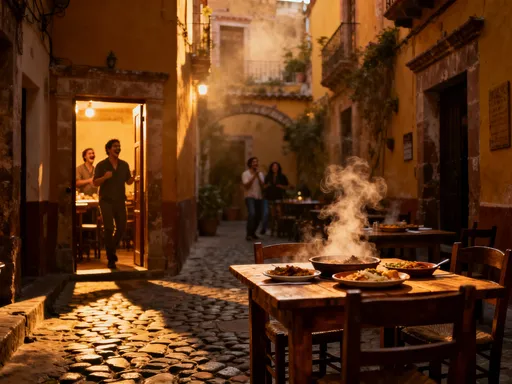
To taste Penang is to understand its history, but the island’s deepest culinary stories are not told in glossy food courts or Instagram-famous hawker stalls. They are found in family-run eateries hidden down narrow alleyways, behind wet markets, or beneath the shade of old rain trees. These are places where recipes have changed little in half a century, where the same wok is used every morning, and where the owner greets regulars by name.
One such gem is a humble stall in Balik Pulau that serves *asam laksa* the way it was made in the 1950s—sour fish broth steeped with tamarind, lemongrass, and torch ginger flower, topped with shredded pineapple and mint. The vendor, a woman in her seventies, uses a recipe taught by her grandmother. She refuses to expand her business, saying, “If I get too many customers, the taste will change.” Her stall has no signage, only a faded umbrella and a wooden cart. Yet locals make the journey from George Town just to taste her version.
Another hidden favorite is a charcoal-fired *chai tow kway* stand near Teluk Bahang. The dish—stir-fried radish cake with egg, garlic, and preserved turnip—is cooked over a traditional charcoal stove, giving it a smoky depth that gas flames cannot replicate. The owner, a retired fisherman, began cooking as a way to pass the time. Now, he serves only ten portions a day, closing once they’re gone. His hands move with the precision of someone who has spent a lifetime working with fire and iron. There’s no menu, no phone number, no online presence—just a small crowd that gathers daily, waiting in quiet anticipation.
What defines these places is not just flavor, but continuity. The ingredients may be simple, the seating plastic, and the walls stained with years of cooking smoke—but the experience is rich with meaning. Each dish carries the weight of memory, of family, of survival through changing times. To eat here is to participate in an unbroken chain of tradition, where food is not a product, but a language of care and identity.
For travelers seeking authenticity, the challenge is not in finding these spots—it’s in approaching them with respect. These kitchens are not restaurants in the modern sense; they are extensions of homes, run by people who cook because they love to, not because they seek fame. A quiet demeanor, a willingness to wait, and a simple “thank you” in Malay or Hokkien can go a long way. The reward is not just a meal, but a moment of connection—a shared silence over steaming bowls, a nod from the cook, a sense of belonging, however brief.
How to Travel Deeper: Practical Tips for Meaningful Exploration
Exploring Penang’s hidden corners requires more than a map—it demands a mindset shift. The goal is not to collect experiences like souvenirs, but to engage with communities in a way that is respectful, humble, and sustainable. The following practical tips can help travelers move beyond the surface while minimizing disruption to local life.
First, prioritize timing. Early mornings are ideal for observing village life, as this is when farmers head to the fields, artisans begin their work, and temples hold quiet prayers. Avoid weekends and public holidays if possible, as even rural areas can become crowded. Visiting during the off-peak season—typically between April and September—also increases the chances of meaningful encounters, as residents are less overwhelmed by tourist traffic.
Transportation is another key consideration. While taxis and ride-hailing apps are convenient, they limit access to narrow village lanes and hidden pathways. Renting a bicycle offers greater flexibility and allows travelers to move at a pace that matches the surroundings. Local buses, though less comfortable, provide a genuine glimpse into daily commutes and are often the only way to reach remote stops. For those unfamiliar with the terrain, hiring a local guide—preferably one raised in the area—can open doors that might otherwise remain closed.
Language also plays a crucial role. While English is widely spoken, learning a few phrases in Malay, Hokkien, or Tamil can build instant rapport. Simple greetings like “Selamat pagi” (Good morning) or “Terima kasih” (Thank you) show effort and respect. When visiting homes or temples, always ask permission before entering or taking photographs. A polite request, even if imperfectly spoken, is often met with warmth and appreciation.
Equally important is the attitude of the traveler. Curiosity should be balanced with restraint. Instead of demanding stories or access, it’s better to listen, observe, and allow relationships to develop naturally. Offering to share a meal, help with a small task, or simply sit and chat can be more meaningful than any transaction. The goal is not to extract experiences, but to be present as a guest.
Finally, support local economies in ethical ways. Purchase crafts directly from artisans, eat at family-run stalls, and avoid bargain hunting for handmade goods. These items are not cheap souvenirs—they represent hours of labor and cultural value. Paying fairly is not just generous; it is an act of preservation.
Why This Kind of Travel Matters: Culture as Connection, Not Consumption
At a time when travel is often reduced to checklists and photo ops, the journey into Penang’s hidden corners offers a powerful alternative. It reminds us that culture is not a commodity to be consumed, but a living relationship to be nurtured. Every quiet village, every aging artisan, every private ritual represents a thread in a fragile but enduring web of human heritage.
Slow, intentional travel has the power to transform both the visitor and the visited. For the traveler, it fosters empathy, deepens understanding, and cultivates gratitude. It shifts the focus from accumulation to appreciation—from how many places you’ve seen, to how deeply you’ve seen one. For local communities, respectful engagement can reinforce the value of their traditions, offering quiet encouragement to continue in the face of modern pressures.
Moreover, this kind of travel helps preserve intangible heritage—skills, languages, rituals, and recipes that cannot be protected by UNESCO plaques or government grants alone. They survive only through practice, transmission, and recognition. When a traveler takes the time to learn a craft, taste a family recipe, or witness a private ceremony, they become part of that continuity, however briefly.
The true measure of meaningful travel is not in the number of destinations visited, but in the quality of attention given. It is found in the pause before taking a photograph, the patience to wait for a story to unfold, the humility to accept an invitation without expectation. These small acts of presence are what turn tourism into connection.
Penang’s hidden corners do not offer spectacle. They offer something more valuable: truth. They remind us that beauty exists in the ordinary, that wisdom resides in quiet hands, and that culture thrives not in performance, but in the daily act of living. For those willing to step off the map, the reward is not just discovery—but transformation.