Wheels, Whisky, and Wild Beauty: My Scottish Highlands Art Road Trip
You know that feeling when you’re behind the wheel, windows down, and the road just… opens up? That’s exactly how I found the soul of the Scottish Highlands—not in crowded tour buses, but through quiet village galleries, misty moors, and centuries-old castles whispering stories. Driving through this rugged landscape, I stumbled upon a vibrant world where ancient traditions meet bold modern art. This isn’t just a journey through nature—it’s a deep dive into culture, painted in highland hues and carved by time. The freedom to pause where the light hits a loch just right, to follow a gravel path to a weaver’s cottage, or to linger in a distillery where local sketches line the walls—this is travel with intention, where every mile reveals not just scenery, but story.
The Freedom of the Open Road: Why Self-Driving Unlocks the True Highlands
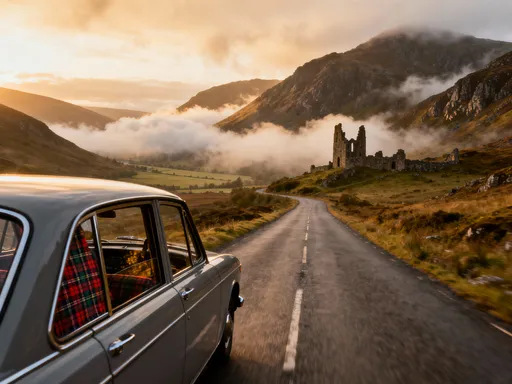
There is a quiet magic in holding the steering wheel as the Highlands unfold beyond the windshield—no fixed schedule, no horn blaring behind you, just the hum of tires on tarmac and the occasional bleat of a distant sheep. Self-driving through Scotland’s northern reaches offers a level of intimacy with the land that no guided tour can replicate. While group excursions often stick to well-trodden stops like Loch Ness or Glencoe viewpoints, the independent traveler can veer off at a hand-painted sign for a pottery studio or follow a narrow lane to a coastal village where Gaelic is still spoken in homes and community halls. The flexibility to pause, explore, and recalibrate the route based on a local’s recommendation or a sudden burst of golden light across the hills is what transforms a trip into a true experience.
Two routes stand out for those seeking both scenic grandeur and cultural depth: the North Coast 500 and the A82. The North Coast 500, often called Scotland’s Route 66, loops over 500 miles from Inverness through remote coastal towns, towering cliffs, and windswept peninsulas. Along this path, art is not confined to galleries—it appears in croft house studios, ferry terminal exhibitions, and even converted fishing shacks displaying local photography. Meanwhile, the A82, stretching from Glasgow to Inverness, cuts through some of the most dramatic landscapes in Europe—Rannoch Moor’s vast emptiness, the brooding silhouette of Ben Nevis, and the shimmering length of Loch Lomond. Each turn reveals a vista that has inspired painters for centuries, and today, many of those very scenes are recreated by living artists whose studios dot the roadside.
Driving in the Highlands requires preparation, especially in shoulder seasons. Winter months bring shorter days, icy patches, and the possibility of snow blocking high passes, while spring and autumn offer softer light and fewer tourists but unpredictable weather. Summer brings longer daylight hours—sometimes nearly 18 hours of sun—ideal for maximizing exploration. Navigation tools are essential, but so is the willingness to disconnect. Mobile signal can vanish for miles, and GPS sometimes lags on single-track roads with passing places. A physical map, a fully charged power bank, and a sense of adventure are just as important as the car itself. Renting a compact, fuel-efficient vehicle with good ground clearance ensures ease on narrow roads and ease of parking in small villages. Most importantly, the self-drive journey teaches patience—waiting for a flock of sheep to cross, yielding to a local farmer’s tractor, or simply stopping to breathe in the scent of heather after rain. These moments, unplanned and unhurried, are where the Highlands truly reveal themselves.
Where Art Meets Landscape: The Highlands as a Living Canvas
The Scottish Highlands do not merely inspire art—they are art. The land itself is a canvas shaped by glacial forces, painted with heather-purple hills, silver-threaded rivers, and skies that shift from stormy slate to golden dawn in a single hour. This ever-changing palette has drawn artists for generations, from 19th-century Romantic painters captivated by the sublime to contemporary photographers and textile artists interpreting the region’s soul through modern eyes. What sets Highland art apart is its deep connection to place. Unlike urban studios where inspiration may come from abstraction or social commentary, here, creativity is rooted in the tangible—the texture of wind-bent trees, the sound of waves on a rocky shore, the silence of a moor at twilight.
Inverness Museum & Art Gallery serves as a natural starting point for understanding this relationship. Housed in a historic building in the capital of the Highlands, the gallery blends archaeological artifacts with rotating contemporary exhibitions. One might find a 2,000-year-old brooch displayed beside a mixed-media installation using recycled fishing nets, symbolizing both continuity and reinvention. The museum’s natural light floods through large windows, casting shifting patterns on the stone floors—a subtle reminder that even the space itself is in dialogue with the environment. Beyond Inverness, smaller community-run spaces offer equally powerful experiences. In Aviemore, the Highland Folk Museum features not only historical reenactments but also seasonal art trails where local painters display plein air works along forest paths. In Fort William, the West Highland Museum occasionally partners with artists to create visual responses to its clan collections, bridging past and present in compelling ways.
The isolation of the Highlands plays a crucial role in shaping artistic expression. Without the distractions of city life, artists often develop a meditative focus, allowing them to observe details others might miss—the way light refracts through a raindrop on a spiderweb, or the subtle gradations of moss on ancient stone. Many studios are located in former farm buildings or converted churches, their walls bearing the marks of time. Natural light is a prized commodity, and large north-facing windows are common in working spaces. Some artists deliberately limit their exposure to digital media during creative periods, choosing instead to walk the hills daily, sketchbook in hand, absorbing the rhythms of the land. This deep immersion results in work that feels authentic, grounded, and emotionally resonant. Whether it’s a watercolor of a mist-shrouded loch or a bronze sculpture echoing the curve of a Highland cow’s horn, the art reflects not just what is seen, but what is felt.
Hidden Studios and Local Craft: Finding Creativity Off the Beaten Path
Some of the most memorable moments of my journey came not in formal galleries, but in unmarked driveways, village halls, and converted barns where artists work in quiet dedication. These hidden studios are the heartbeat of Highland creativity, places where tradition is not preserved as a relic, but lived and reimagined daily. One rainy afternoon near Kingussie, I followed a narrow lane to a croft where a weaver named Morag operates a handloom passed down from her grandmother. Her workshop, warm and fragrant with wool, is filled with tartans in deep greens, heathers, and blues—colors drawn directly from the surrounding landscape. She explained that each pattern tells a story, not just of clan affiliation, but of personal memory: a stripe for the river where she learned to fish, a border for the mountain that shelters her home.
Further west, in a converted stone bothy near Glenuig, ceramicist Alistair MacLeod shapes clay into vessels inspired by ancient Pictish stones and seashells. His work, fired in a wood-burning kiln, bears the marks of flame and ash—imperfections that he considers part of the narrative. “The Highlands don’t reward perfection,” he said, smiling. “They reward resilience.” His pieces, though functional, feel ceremonial, as if meant for rituals yet to be invented. Buying directly from artists like Morag and Alistair is not just a transaction—it’s an exchange of stories, a moment of human connection that mass-produced souvenirs can never replicate. Many of these makers welcome visitors by appointment, and some participate in annual events like the Highland Open Studios trail, when dozens of artists across the region open their doors to the public.
Craft fairs and pop-up exhibitions are another way to encounter authentic Highland art. The Lochaber Craft Fair in Fort William, held each autumn, brings together woodcarvers, jewellers, knitters, and printmakers from across the west coast. Unlike commercial markets, these events emphasize process—visitors can watch a silversmith shape a brooch, or see how natural dyes are extracted from lichen and heather. The items on display are not souvenirs in the tourist-trap sense, but heirloom-quality pieces meant to last generations. Pop-up shows in converted post offices or old schoolhouses often feature collaborative works—textile artists pairing with poets, or musicians composing soundscapes for visual installations. These ephemeral exhibitions, accessible only by car and often announced through local newsletters or social media, embody the spirit of discovery that defines the self-driven art journey. They remind us that art in the Highlands is not something to be passively consumed, but actively sought, like a hidden glen revealed only after a long walk.
Castles, Clans, and Cultural Memory: History Woven into Art
The Highlands are a landscape steeped in memory, where every ruin, standing stone, and winding glen carries echoes of centuries past. This deep sense of history is not confined to textbooks or museum plaques—it lives in the art of today. Visiting castles like Eilean Donan and Urquhart is not just about photographing scenic ruins; it’s about understanding the narratives that continue to shape creative expression. Eilean Donan, dramatically positioned where three sea lochs meet, has survived Norse invasions, clan conflicts, and even 18th-century bombardment. Its reconstruction in the 20th century was not an act of nostalgia, but a reclamation of identity. Today, it stands as a symbol of endurance, and its image appears in countless artworks—not as a static postcard, but as a living emblem of resilience.
At Urquhart Castle on the shores of Loch Ness, the wind whistles through stone arches that once housed medieval lords. The site’s visitor center includes not only historical displays but rotating art installations by contemporary Scottish artists. One recent exhibit featured large-scale textile pieces interpreting clan tartans as abstract maps of migration and displacement. Another used sound and light to simulate the voices of former inhabitants, blending historical research with artistic interpretation. These works do not seek to recreate the past, but to engage with it—asking how ancient loyalties, battles, and traditions continue to influence modern identity. The thistle, Scotland’s national flower, appears frequently in such works—not just as a decorative motif, but as a symbol of protection and pride. Similarly, the kilt, once a practical garment for Highland life, has evolved into a powerful visual symbol, reinterpreted in paintings, sculptures, and even digital art.
Many artists draw directly from Gaelic heritage, incorporating script, proverbs, and oral traditions into their work. A mural in a community center in Mallaig, for example, features lines of poetry in Gaelic woven into the image of a fishing boat returning at dawn. The words, translated below, speak of homecoming and continuity. Textile artists sometimes embroider clan mottoes into their pieces, while sculptors carve Gaelic inscriptions into stone or wood. This fusion of language and visual art reinforces the idea that culture is not static—it is carried forward through creativity. Even in abstract works, the influence of history is felt: a jagged brushstroke might evoke the edge of a sword, a layered collage could mirror the strata of a mountainside, and a monochrome palette may reflect the austerity of life in harsh climates. By engaging with these themes, contemporary artists ensure that the Highlands’ past is not forgotten, but reimagined for new generations.
Music, Language, and the Rhythm of Place
If the Highlands have a soundtrack, it is carried on the wind—through the drone of bagpipes at a village gathering, the lilting melody of a Gaelic lullaby, or the lively bounce of a fiddle tune at a ceilidh. Music here is not performance; it is participation, a way of binding community and preserving memory. This sonic landscape deeply influences visual art, creating a cross-pollination of senses. Album covers for traditional musicians often feature original paintings or photography that capture the mood of the music—mist rising off a loch, a lone figure on a hillside, or the warm glow of a cottage window at dusk. Festival posters for events like the Hebridean Celtic Festival or the Belladrum Tartan Heart Festival are themselves works of art, blending bold typography with folk motifs and vibrant colors.
Public murals in towns like Oban and Ullapool celebrate this musical heritage, depicting piper processions, fiddle players mid-reel, or community choirs singing in harmony. These murals are more than decoration—they are affirmations of cultural pride, often created in collaboration with local schools and music groups. Some artists incorporate actual sound elements into their installations, such as wind-activated chimes shaped like musical notes or steel sculptures that hum when the breeze passes through them. The connection between language and art is equally strong. Gaelic, though spoken by a minority today, remains a vital thread in the cultural fabric. Artists use the script not just for meaning, but for its aesthetic—its flowing curves and distinctive characters adding visual rhythm to paintings, textiles, and ceramics. A recent exhibition in Inverness featured a series of typographic prints where Gaelic words for ‘wind’, ‘stone’, and ‘memory’ were rendered in fonts inspired by natural forms.
The preservation of Gaelic is not merely linguistic—it is artistic, emotional, and spiritual. When a child learns a song in Gaelic at school, or a poet composes a new verse in the old tongue, they are not just keeping a language alive; they are sustaining a worldview. Artists respond to this by creating work that invites reflection on identity, belonging, and continuity. A painting might depict an empty chair beside a peat fire, symbolizing a lost speaker of the language, while a sculpture could feature a tree with roots shaped like letters. These pieces do not preach; they invite. They ask the viewer to listen—not just with ears, but with heart. In a world of rapid change, the Highlands offer a counter-rhythm, one measured not in clicks and streams, but in the steady beat of a drum, the strum of a harp, and the quiet hum of creativity rooted in place.
Fueling the Journey: Cafés, Whisky Stops, and Cultural Pitstops
Every great journey needs moments of pause—places to warm up with a cup of tea, share stories with locals, or simply sit and absorb the view. In the Highlands, these pitstops are not afterthoughts; they are integral to the experience. Small-town cafés, often housed in converted railway carriages or stone cottages, serve as informal gathering places for artists, writers, and craftspeople. The Highland Roast in Aviemore, for instance, not only brews excellent coffee but displays rotating works by local painters on its exposed stone walls. Patrons sip lattes beneath landscapes of Cairngorm peaks, and conversations often turn to upcoming exhibitions or community projects. These spaces foster connection, turning strangers into friends over shared appreciation of art and place.
Whisky distilleries offer another kind of cultural nourishment. Far from being mere tourist attractions, many operate as de facto art venues. The Dalwhinnie Distillery, nestled in the highest main distillery in Scotland, hosts a small gallery of landscape photography and seasonal art shows. Visitors can sip a dram of smooth single malt while viewing works inspired by the very hills that shelter the stills. Similarly, the Aberfeldy Distillery features an interactive exhibit that blends whisky-making with storytelling, including original illustrations and soundscapes. Buying a bottle here feels less like a souvenir purchase and more like taking home a piece of the region’s soul. Other distilleries, like those in Speyside, offer artist residencies, where creatives spend weeks immersed in the environment, producing work that captures the essence of the craft.
Bookshops, too, play a vital role. The West Highland Museum Bookshop in Fort William specializes in Scottish history, Gaelic literature, and photography collections that document the changing landscape. Browsing its shelves, one might find a limited-edition print of a Highland storm or a hand-bound journal made by a local artisan. These quiet moments—flipping through a book of Hebridean poetry, sipping whisky in a sunlit distillery, or chatting with a potter in a roadside café—are what give the journey depth. They remind us that travel is not about checking off landmarks, but about collecting experiences that linger long after the engine is turned off. By choosing to support these small, independent businesses, travelers contribute directly to the cultural ecosystem that makes the Highlands so unique.
Driving with Respect: Sustainable Travel in a Fragile Landscape
The beauty of the Scottish Highlands is undeniable, but it is also fragile. The very qualities that draw visitors—untouched moors, clear rivers, and quiet villages—are vulnerable to the pressures of tourism. Sustainable travel is not a trend here; it is a necessity. Responsible visitors understand that their presence has an impact, and they strive to minimize it. This begins with simple choices: staying on marked trails to prevent erosion, disposing of waste properly, and respecting wildlife by observing from a distance. Single-track roads require courtesy—yielding at passing places, driving slowly, and never blocking gates or driveways. These acts of consideration are not just rules; they are gestures of respect toward the land and its people.
Supporting local economies is another pillar of sustainable travel. Buying art directly from makers, dining at family-run inns, and choosing locally owned accommodations ensure that tourism dollars stay within the community. It also fosters authenticity—when travelers engage with creators face to face, they gain a deeper appreciation for the work and its context. This kind of tourism is slower, more intentional, and ultimately more rewarding. It shifts the focus from consumption to connection, from taking photos to making memories rooted in real human interaction.
Environmental awareness extends to transportation choices. While self-driving offers freedom, it also carries a carbon footprint. Travelers can offset this by carpooling when possible, choosing fuel-efficient vehicles, and combining multiple stops into single trips to reduce mileage. Some opt to park and explore on foot or by bike, especially in areas like Glen Coe or Loch Lomond, where trails offer breathtaking views without the need for a car. Additionally, many Highland communities are working to improve recycling infrastructure and reduce single-use plastics, and visitors can support these efforts by carrying reusable bottles and bags.
Ultimately, sustainable travel is about mindset. It is about approaching the Highlands not as a backdrop for photographs, but as a living, breathing culture with its own rhythms and values. It is about listening—to the wind, to the stories, to the quiet wisdom of those who call this place home. When we travel with respect, we do not just see the art of the Highlands; we become part of its ongoing creation. Each mindful choice, each respectful interaction, adds a brushstroke to the larger picture of preservation and appreciation.
The Scottish Highlands reveal themselves slowly, to those willing to listen. They are not a destination to be conquered, but a story to be lived—one mile, one conversation, one quiet moment at a time. This road trip, with its wheels turning on ancient stone, its whisky shared in warm halls, and its art born of wild beauty, is more than a journey. It is an invitation: to slow down, to look deeper, and to let the land speak. Take the wheel. Follow the quiet roads. And let the Highlands show you not just what they are, but who they are.